
Assessing Kindergarten Readiness and Identifying Skill Gaps
A kindergarten readiness assessment is a snapshot, not a pass-or-fail verdict. It compares what a child currently demonstrates with a stated readiness expectation across language and literacy, early mathematics and cognition, social-emotional skills and approaches to learning, and physical development, while considering consistency, independence, support, and context. A possible skill gap is more meaningful when difficulty repeats across comparable opportunities, not after one error or an unfamiliar task.
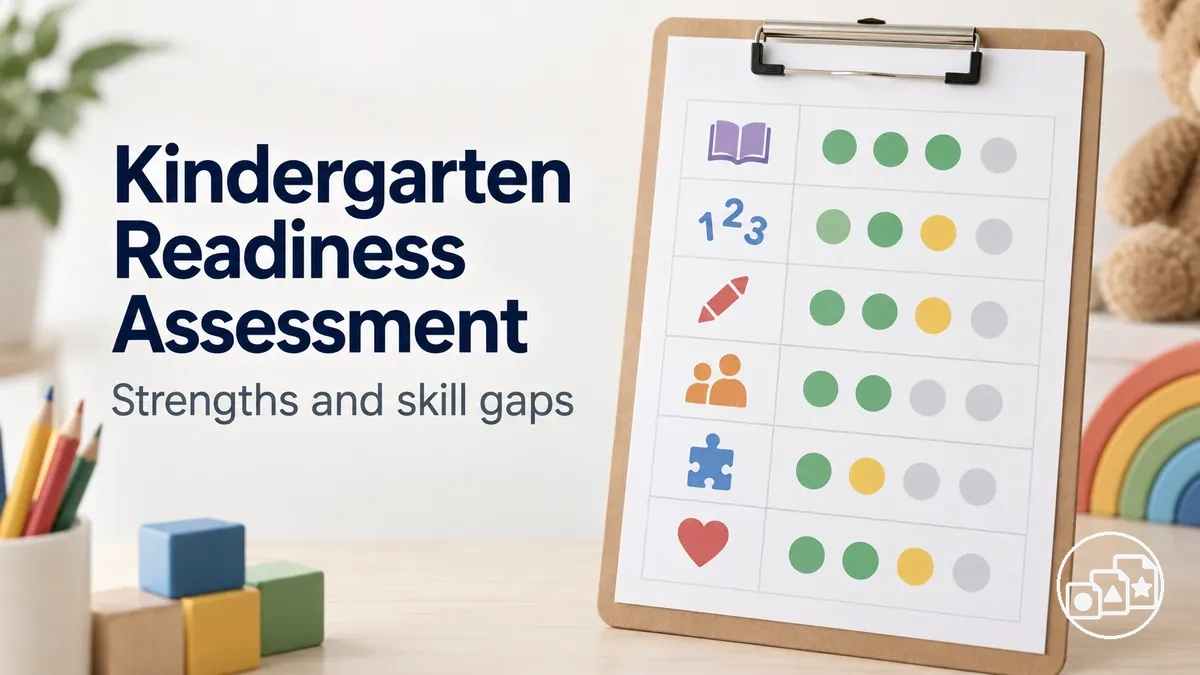
At a glance
Interpret the pattern, not one result
Use the same evidence sequence for any readiness skill so the observation stays tied to a clear expectation and its context.
- CompareState the skill and the readiness expectation, then record what the child currently demonstrates.
- RepeatLook for the same pattern across comparable attempts or familiar contexts rather than relying on one result.
- Check support and contextNote independence, prompting, familiarity, attention, opportunity to learn, and other conditions that can change performance.
- Prioritise the patternGive more weight to a repeated gap that continues across comparable checks or limits related readiness tasks.
Priority rises when a difficulty is repeated, support-dependent, or affects related tasks. A single miss, unfamiliar task, or difficult day provides weaker evidence.
Home readiness checks can guide observation and practice, but they do not diagnose a developmental or learning condition and do not replace formal screening procedures defined by the relevant instrument or school system.
Interpretation can change with the child's age, task familiarity, opportunity to learn, and the support provided, so the same observable result can carry different meaning in different contexts.
Table of Contents
What a Kindergarten Readiness Assessment Measures
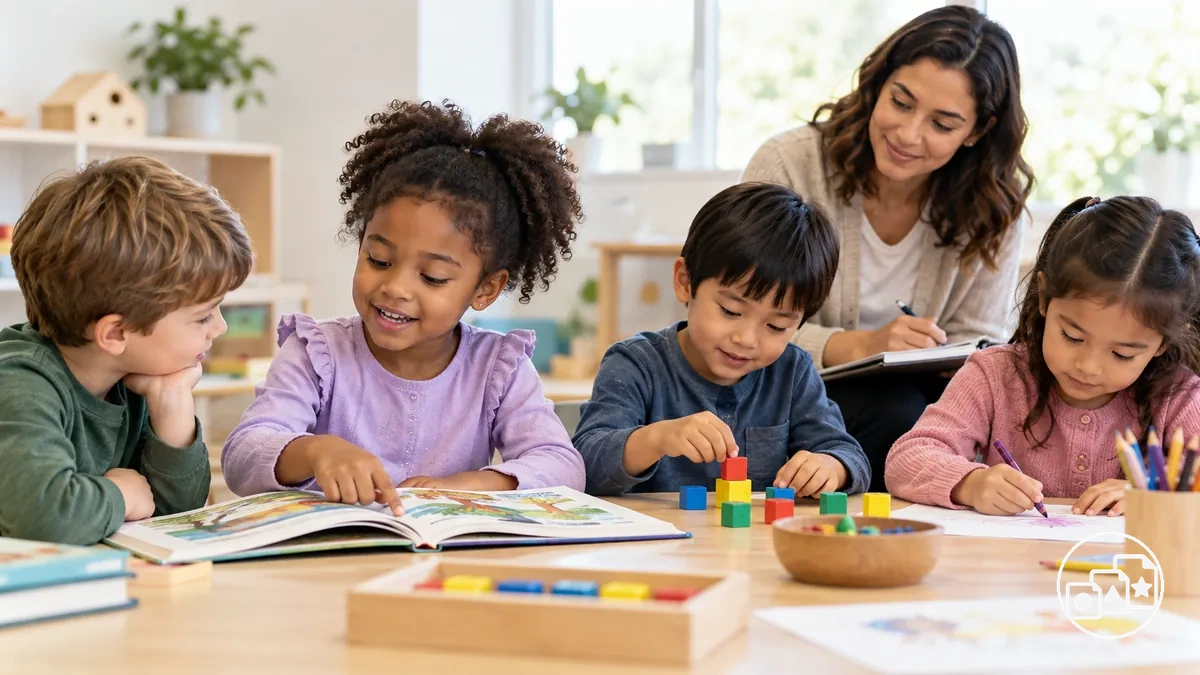
A kindergarten readiness assessment is multidimensional: it typically samples several developmental domains and early learning abilities rather than academic skills alone.
These may include language and literacy, early mathematics and cognition, social-emotional skills and approaches to learning, and physical development.
Each readiness domain contributes different evidence about what a child can demonstrate in relevant situations.
Considering the domains together provides a broader interpretation than treating one observed skill as representative of overall readiness.
| Readiness domain | Representative observable skills | Contribution to readiness interpretation |
|---|---|---|
| Language and literacy | Communicating ideas, understanding spoken language, engaging with books, and demonstrating early reading-related skills | Shows how the child uses and understands language and engages with early literacy experiences. |
| Early mathematics and cognition | Counting, recognising number concepts, using simple reasoning, and solving age-appropriate problems | Provides evidence about early mathematical understanding, cognition, and problem-solving. |
| Social-emotional skills and approaches to learning | Interacting with others, regulating behaviour, attending to activities, persisting, and participating in learning | Shows how the child manages interaction, self-regulation, participation, and engagement with learning. |
| Physical development, fine-motor skills, and functional independence | Using hands for age-appropriate tasks, coordinating movement, and managing familiar self-care activities | Provides evidence about motor participation and functional independence used during everyday kindergarten activities. |
The exact developmental domains and measured abilities vary according to the assessment system, instrument, and expectations being used.
One task samples only part of a broader domain, so its result should not represent every ability within that domain.
Signs That May Indicate a Kindergarten Readiness Skill Gap
A possible kindergarten readiness skill gap may be suggested when difficulty with an expected skill appears repeatedly in relevant contexts.
One mistake, an unfamiliar task, or one difficult day is not enough to establish a consistent pattern.
The signal becomes more meaningful when similar difficulty persists across comparable opportunities to demonstrate the skill.
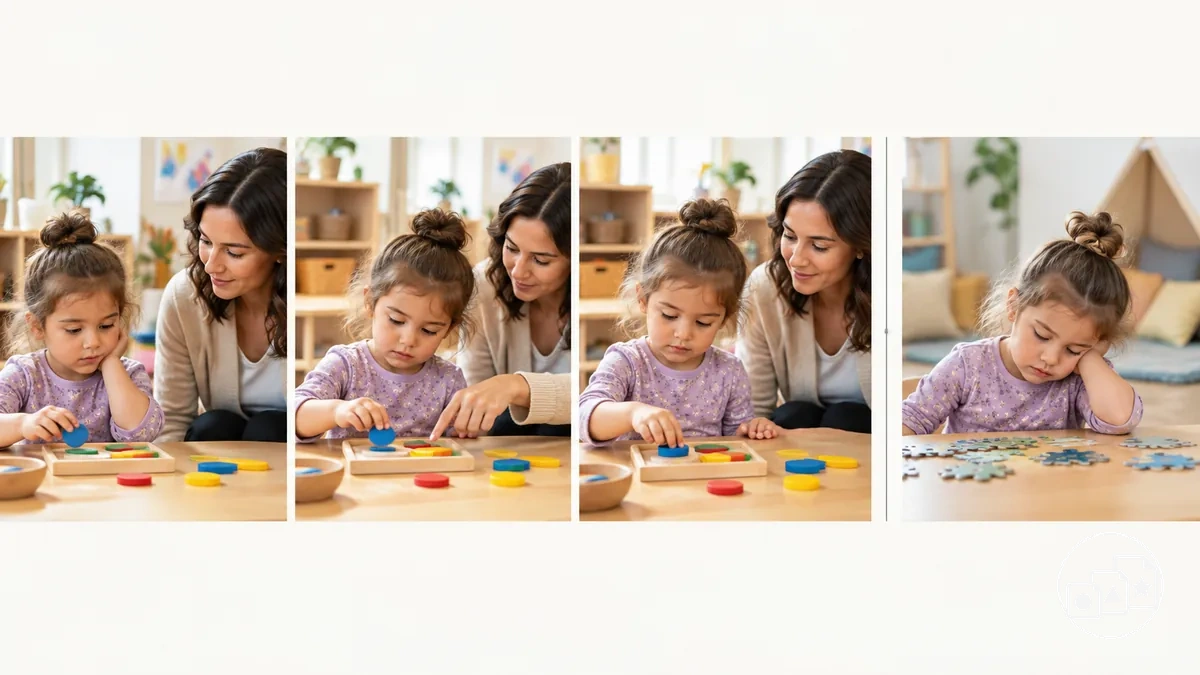
A useful interpretive pattern begins with an observed difficulty in a specific readiness skill, followed by repeated observation in similar situations.
Check whether the child demonstrates the skill independently, needs repeated prompting, or has difficulty carrying the same skill across similar tasks.
Then consider context and support, because fatigue, shyness, refusal, distraction, task unfamiliarity, or slower performance can offer alternative explanations for the observation.
The resulting interpretation should remain tentative unless a consistent pattern is supported by repeated observations.
- Signal: Identify the specific readiness skill that appears difficult relative to the expectation being checked.
- Repeated observation: Look for the same difficulty across comparable attempts or similar tasks rather than relying on one performance.
- Context and support check: Note whether performance changes with familiarity, attention, prompting, encouragement, or other relevant conditions.
- Tentative interpretation: A repeated difficulty that remains across similar contexts and support conditions may indicate a skill area needing further observation.
Stronger signal for further observation
Repeatedly struggling to follow a familiar two-part classroom direction despite appropriate support, or needing repeated prompting across similar fine-motor tasks, carries more weight because the difficulty recurs under comparable conditions.
Weaker signal from one context
The same outward difficulty during one unfamiliar activity after a tiring day, or help needed only when the materials or task are unfamiliar, carries less weight because context and consistency differ.
Interpretive rule: compare consistency, familiarity, context, and support before treating an observed difficulty as a possible skill gap.
How to Assess Kindergarten Readiness Skills at Home
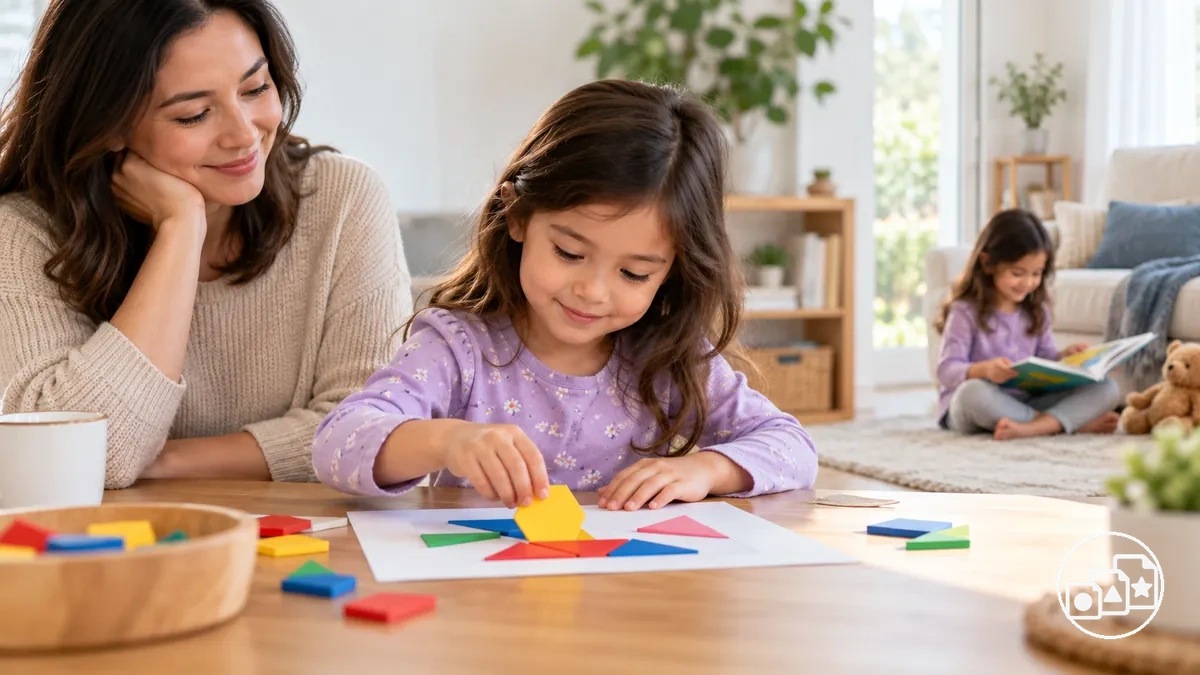
Home kindergarten readiness assessment works best as low-pressure, repeated observation in familiar situations rather than an attempt to recreate a formal screener.
The aim is to compare what the child demonstrates with the readiness expectation being checked while noting independence, prompting, and consistency.
An informal assessment at home provides context-dependent evidence; it does not produce an official or standardised readiness score.
Use a short sequence that moves from selecting a skill to interpreting a pattern.
For each observation or simple task, note what the child does independently, what support is needed, and whether performance remains consistent during a repeated check.
- Choose the skill or expectation: Identify one readiness expectation to check so the observation has a clear focus.
- Observe in a familiar context: Watch for the skill during a familiar routine where the child can demonstrate it naturally and with low pressure.
- Offer a simple task when needed: If everyday observation does not provide enough evidence, use a brief skill check that directly relates to the selected skill.
- Repeat or vary the check: Look for the skill again in a comparable situation or slightly different context to see whether the performance is consistent.
- Note independence and prompting: Record whether the child completes the skill independently or needs verbal, visual, or practical support.
- Interpret the pattern: Compare performance across observations, considering consistency, familiarity, and support rather than treating one result as conclusive.
A repeated pattern across familiar contexts provides more useful home evidence than an isolated result, but no fixed number of repetitions establishes readiness.
A skill shown independently and consistently carries a different interpretation from the same performance achieved only with repeated prompting.
Unfamiliarity with the task or changes in support can also affect what an observation means.
Keep the home readiness check informal and brief so the focus remains on what the child can usually demonstrate, not on tolerance for repeated testing.
Observe Everyday Skills and Behaviours
Everyday readiness behaviours are the skills a child demonstrates during everyday routines without turning the situation into a test.
Natural observation in a familiar context can reveal spontaneous performance, independence, and consistency, including whether the child uses a skill without prompting or needs support before it appears.
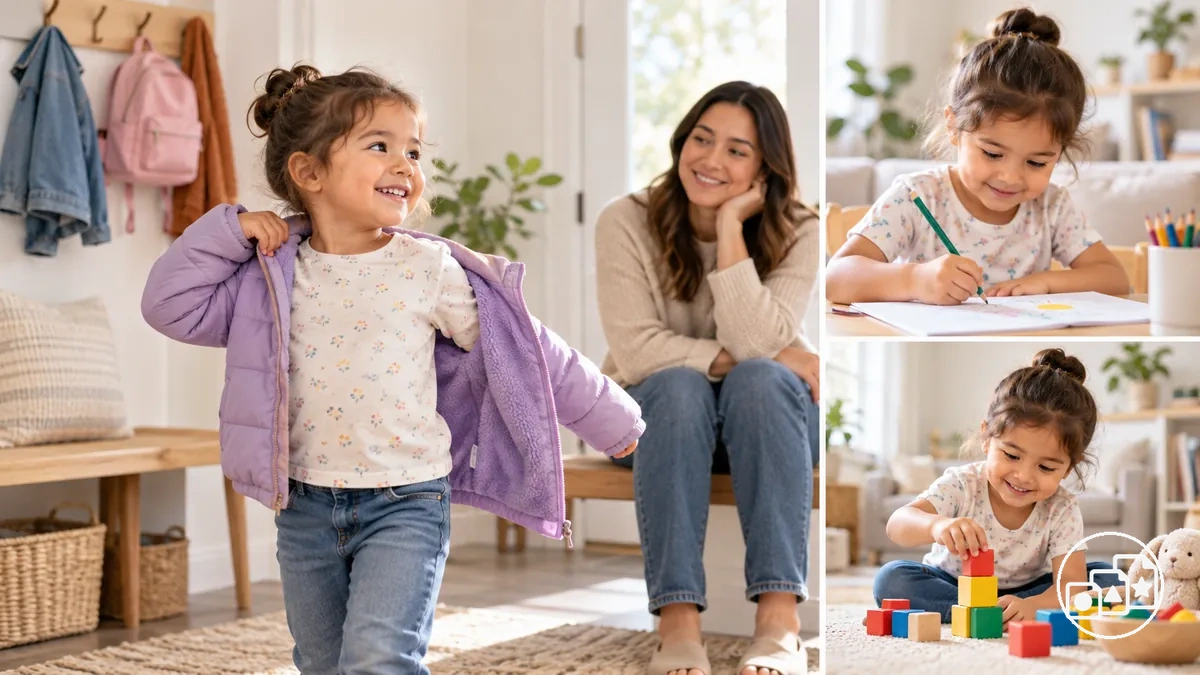
- Communication and directions: Notice whether the child communicates needs or follows a familiar direction spontaneously, independently, or only after prompting, and whether the behaviour appears consistently in similar routines.
- Self-care: Observe familiar self-care actions and note which parts the child manages independently, where support is needed, and whether that level of independence is consistent.
- Participation: During ordinary activities with other people, notice how the child joins in or responds to familiar expectations and whether participation occurs spontaneously or after repeated cues.
- Fine-motor actions: Watch how the child handles familiar drawing, fastening, or other basic hand-use activities, noting independence, prompting, and consistency rather than treating one attempt as conclusive.
- Early literacy and numeracy: Notice when the child naturally uses familiar early literacy or numeracy skills during everyday activities and whether the skill appears independently across comparable opportunities.
Independent performance in a familiar routine provides different evidence from performance that appears only after repeated cues.
Prompting, familiarity, mood, and language demands can affect what is observed, so differences in everyday skill use should be interpreted in that context.
Observation at home therefore shows how a skill appears under particular conditions rather than proving readiness on its own.
Use Simple Questions and Tasks to Check Specific Skills
Use a simple question or brief task when everyday observation leaves a specific skill unclear.
A targeted readiness task should probe one skill closely enough to clarify what the child can demonstrate, while the observation records how the child responds rather than producing a pass-or-fail judgement.
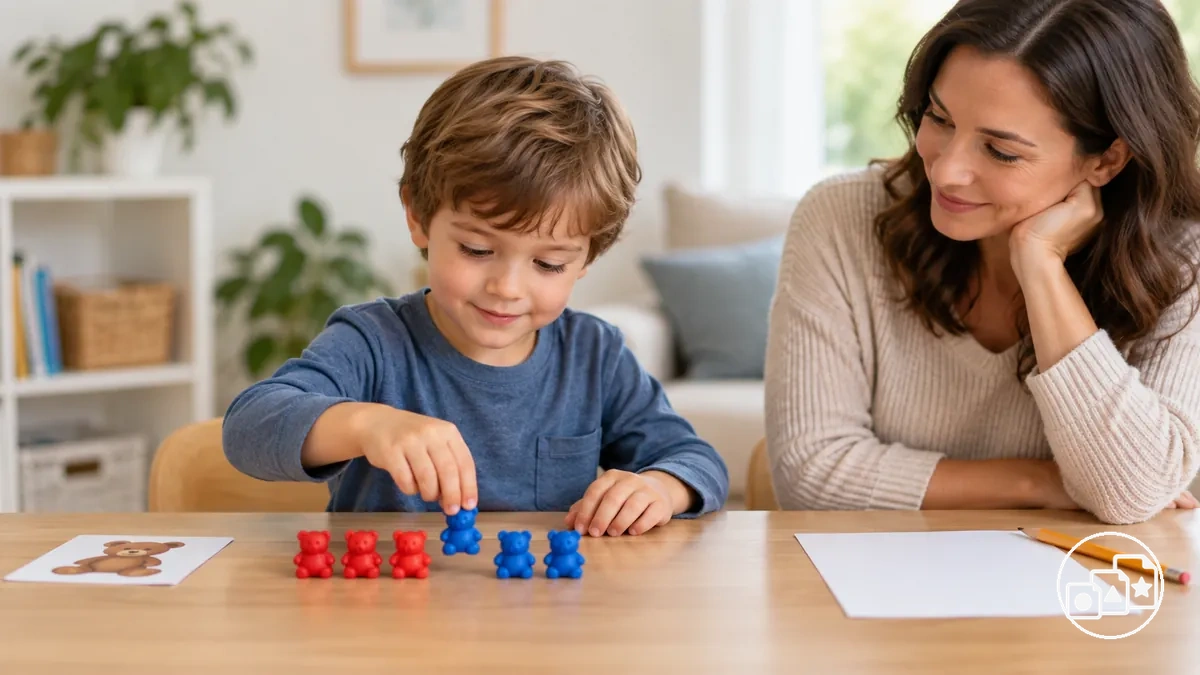
The following examples pair a broad task type with the skill it probes and evidence to observe, such as accuracy, strategy, independence, prompting, or consistency.
They are illustrative targeted checks, not a test battery.
- Follow a simple direction: Probe understanding of the direction and observe whether the child responds accurately and independently or needs prompting.
- Count or compare familiar objects: Check an early numeracy skill and observe accuracy, the strategy used, and whether the response remains consistent when the context changes slightly.
- Identify or discuss familiar print or pictures: Probe an early literacy or language skill and note what the child recognises or communicates independently and what support is needed.
- Draw, trace, or manipulate a familiar object: Check a relevant fine-motor skill and observe how independently the child performs the action rather than judging the finished product alone.
- Answer a focused question about a familiar situation: Clarify a specific communication or reasoning skill by observing the response, strategy, and amount of prompting required.
Task difficulty should be appropriate for the skill being checked: an appropriately targeted task can isolate the skill, while an overly difficult or unfamiliar task can confound the observation.
Before interpreting worksheet performance, match worksheet difficulty to skill level, and avoid repeating or drilling the same task until practice changes the child's starting performance.
One correct answer or one unsuccessful attempt is not definitive; interpretation is more useful when consistency, independence, familiarity, and prompting are considered together.
How to Interpret Assessment Results and Identify Priority Skill Gaps
Assessment results should be interpreted as a readiness pattern of strengths, emerging skills, and repeated gaps rather than as one overall readiness label.
Start with the child's current performance and a relevant comparison point, such as the expectation being checked, then consider how consistently and independently the skill is demonstrated.
The resulting pattern strength indicates how much interpretive weight the observation should receive, not a fixed judgement about the child.
Practical priority depends on the quality and context of the assessment evidence.
Consistency across attempts or contexts, independence, the support required, and the effect of a weaker skill on other readiness tasks help distinguish an isolated miss from a repeated gap.
A repeated gap may support prioritising that skill when evidence also shows that it is needed for other readiness tasks, while an isolated difficulty provides less evidence for priority.
- Demonstrated performance: Compare what the child currently demonstrates with the specific expectation or comparison point being considered.
- Consistency: Give repeated evidence across comparable attempts or contexts more interpretive weight than a single different response.
- Independence: Note whether the skill is demonstrated independently or appears only when assistance is provided.
- Support required: Consider the type and amount of prompting or assistance associated with successful performance.
- Cross-task impact: Consider a repeated gap a higher practical priority when evidence shows that the weaker skill also limits performance in other readiness tasks that depend on it.
Two children can give the same incorrect response on one task while the surrounding evidence points in different directions.
Usually independent
If the child usually demonstrates the skill independently, the error is more consistent with an isolated miss and provides weaker evidence for prioritising that skill.
Repeated support needed
If the child consistently needs support with the same skill across comparable checks, the repeated pattern provides stronger evidence that the skill may deserve priority.
The identical response does not establish the same priority; consistency, independence, support required, and context determine how much weight the observation should receive.
Compare Demonstrated Skills With the Readiness Expectations Being Used
A demonstrated skill can be interpreted as a possible gap only when it is compared with a clearly stated readiness expectation or reference point.
The comparison should identify the expected level, what the child currently demonstrates, and the support needed before describing the result as consistently demonstrated, emerging with support, or not yet demonstrated against that expectation.
- Skill being checked: Identify the specific demonstrated skill being compared so the evidence remains tied to one readiness criterion.
- Expected level: State the readiness expectation and its relevant age range, school-entry context, or other conditions rather than assuming the same expectation applies everywhere.
- Demonstrated state and support: Record what the child demonstrates and the support needed, distinguishing independent performance from performance that emerges with prompting or assistance.
- Interpretation: Compare the demonstrated state with the stated expectation and its context to describe the evidence as consistently demonstrated, emerging with support, or not yet demonstrated against that reference point.
The source of the readiness expectation matters because age range, school-entry context, local guidance, prior learning opportunities, and normal developmental variation can affect which comparison is appropriate.
A kindergarten readiness skills checklist can provide a reference point for skills to compare, but a general checklist is not a standardised diagnostic instrument.
Expectations may differ across schools, systems, or assessment tools, so interpretation should retain the conditions attached to the reference point and consider the child's opportunity to learn the skill.
Identify Patterns of Strengths and Gaps Across Skill Areas
A cross-skill pattern helps distinguish an isolated low result from repeated weakness that recurs across related observations.
Compare each skill area by its observed state, independence or support, and consistency so recurring gaps and stable strengths remain visible without combining unlike skills into one score.
| Skill area | Observed state | Independence or support | Consistency | Interpretation or priority |
|---|---|---|---|---|
| Skill with an isolated low result | Difficulty appears in one observation but the skill is demonstrated in other comparable situations | Usually independent; support may be needed in the isolated observation | Difficulty does not recur across related tasks or contexts | Provides weaker evidence of a recurring gap and may warrant continued observation rather than higher priority |
| Skill with repeated weakness | The same difficulty appears across related tasks | Support is repeatedly needed for the skill to be demonstrated | Difficulty recurs across comparable observations | Provides stronger evidence of a recurring gap and may suggest higher priority |
| Skill showing stable strengths | The skill remains demonstrated across related tasks or contexts | Performance is consistently independent or requires little support | The strength remains stable across comparable observations | Provides evidence of an established strength under the observed conditions |
Repeated weakness across related tasks provides stronger evidence of a recurring pattern than one isolated low result, while stable strengths across contexts show where performance remains consistent and independent.
A gap may suggest higher priority when it repeatedly requires support or when existing observations show that the weaker skill affects related tasks, including a foundational relationship between skills.
Priority should therefore reflect the documented pattern and context rather than giving every weak observation equal weight.
What Readiness Assessment Results Can and Cannot Show
Readiness assessment results can describe a child's current observed performance, including demonstrated skills, consistency, support needs, and possible strengths or gaps when compared with stated readiness expectations.
They do not by themselves establish why a difficulty occurs, diagnose a developmental or learning condition, or guarantee future school success.
The useful boundary is between what the observed evidence supports and what requires additional context or evaluation.
Results can reasonably indicate
- Current skill demonstration: what the child demonstrates during the observed task or situation.
- Consistency: whether the same skill is demonstrated across comparable observations rather than appearing in only one result.
- Support needs: whether the child demonstrates the skill independently or with prompting or assistance.
- Comparison with expectations: how the observed performance compares with the stated readiness expectation being used as the reference point.
Results alone cannot establish
- Cause: why a weak result or difficulty occurred.
- Diagnosis: whether the child has a developmental or learning condition.
- Long-term prediction: whether current performance guarantees a particular future school outcome.
- A universal readiness verdict: whether one task, worksheet, or day's performance determines readiness across contexts.
Conclusions about cause, diagnosis, or long-term outcomes require additional context or, where appropriate, further evaluation.
For example, a weak worksheet result may have more than one possible explanation, so the result describes what happened on that task but does not establish its cause.
Understanding why children struggle with worksheets requires further checking of the task, context, support, and the child's performance across other relevant observations before a cause is assigned.
How Home Readiness Checks Differ From Formal Kindergarten Screening
A home readiness check and formal kindergarten screening can both provide information about a child's current skills, but they serve related rather than interchangeable purposes.
A home check uses informal observation in familiar contexts to identify skills the child demonstrates and areas worth watching.
Formal kindergarten screening may use defined procedures, administration requirements, and reference criteria for an intended school-system purpose.
The meaningful differences concern purpose, administration, standardisation, observation or task structure, scoring or reference criteria, timing, and intended use.
Comparing both approaches on the same criteria shows what each type of assessment can provide without treating either as inherently better or more accurate.
| Comparison criterion | Home readiness check | Formal kindergarten screening |
|---|---|---|
| Purpose | Gather informal observations about current skills and identify areas worth watching. | Gather readiness information for a defined educational or school-system purpose. |
| Administration | Usually conducted informally by a parent or caregiver in a familiar context. | Administered according to the procedures established for the screening process or instrument. |
| Task or observation structure | May use everyday observation or brief activities selected to check a particular skill. | May use defined tasks, observations, or procedures specified by the screening approach. |
| Standardisation | Informal conditions and support can change between observations, so the check is not standardised. | May use defined administration procedures intended to make observations or results interpretable within that screening system. |
| Scoring or reference criteria | Interpreted informally against the readiness expectation being considered, with attention to consistency, independence, and support. | May use specified scoring or reference criteria established by the screening instrument, program, or jurisdiction. |
| Timing | Can be carried out when a parent or caregiver wants to observe a readiness skill and repeated when more context is needed. | May be administered within a timing window or schedule established by the relevant school system or jurisdiction. |
| Intended use | Supports informal understanding of demonstrated skills and areas that may merit further observation. | May inform educational planning or other school-system decisions defined by the applicable screening process. |
Formal kindergarten screening procedures, timing, scoring or reference criteria, and intended use can vary by jurisdiction and school system, so requirements from one location should not be treated as universal.
Local procedures therefore need to be checked before interpreting a formal screening process or applying its criteria elsewhere.
Practice worksheets can provide observations or practice opportunities, but a worksheet by itself is neither the broader process of informal home observation nor a formal screener administered under defined procedures.