
Pre-Reading and Early Literacy Skills for Kindergarten Readiness
Pre-reading and early literacy readiness before kindergarten means developing the foundations for reading—not already reading independently. The core profile includes oral language and vocabulary, phonological awareness of spoken sounds, print and book concepts, and emerging letter-sound connections; children may develop these areas unevenly, so no single skill or worksheet result establishes overall readiness.
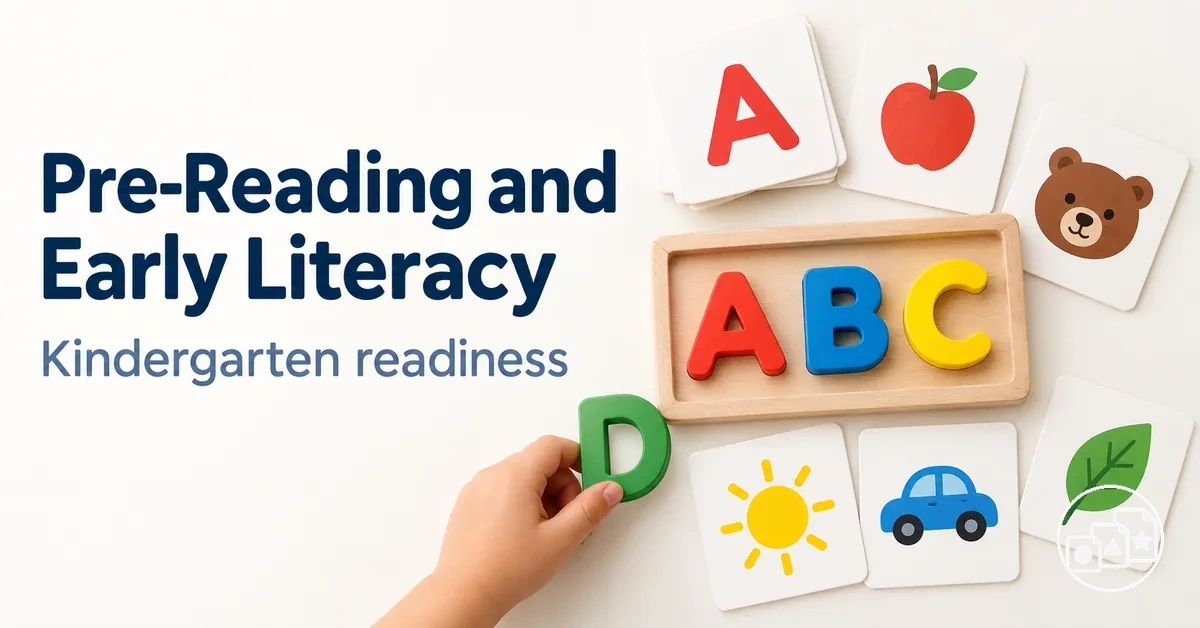
Reading readiness at a glance
Use these four foundations as a profile of emerging skills, not as a pass/fail checklist. Each answers a different question about how a child is getting ready to learn to read.
- Meaning and language
- Oral language, vocabulary, and listening help a child understand words and stories and express ideas.
- Spoken sound structure
- Phonological awareness means noticing features such as rhyme, syllables, and beginning sounds without needing print.
- How print works
- Print awareness and book concepts include knowing that print carries meaning and that books and written English follow familiar conventions.
- Sound–symbol links
- Early letter-sound knowledge links familiar printed letters with common sounds; recognising a letter, naming it, and giving a sound are related but distinct responses.
Practise: use shared reading, conversation, sound play, print noticing, and familiar letter-sound links in short, low-pressure routines.
Observe and adjust: simplify when repeated guessing, heavy prompting, or frustration makes the task unmanageable; add challenge gradually when the current level is comfortable with little support.
Interpret narrowly: worksheets can reinforce a specific skill after it has been introduced, but worksheet completion is not a measure of overall kindergarten readiness or a diagnosis.
Table of Contents
What Reading Readiness Means Before Kindergarten
Reading readiness before kindergarten means having emerging skills that form the foundations for learning to read, rather than already reading independently.
These developing literacy skills prepare a child for beginning reading without creating a pass/fail requirement.
Early reading readiness can appear across several related areas, and development may vary from one area to another.
A child may engage with spoken language and its meaning, notice sound patterns such as rhymes or syllables, understand that print carries meaning, and begin connecting familiar letters with letter sounds.
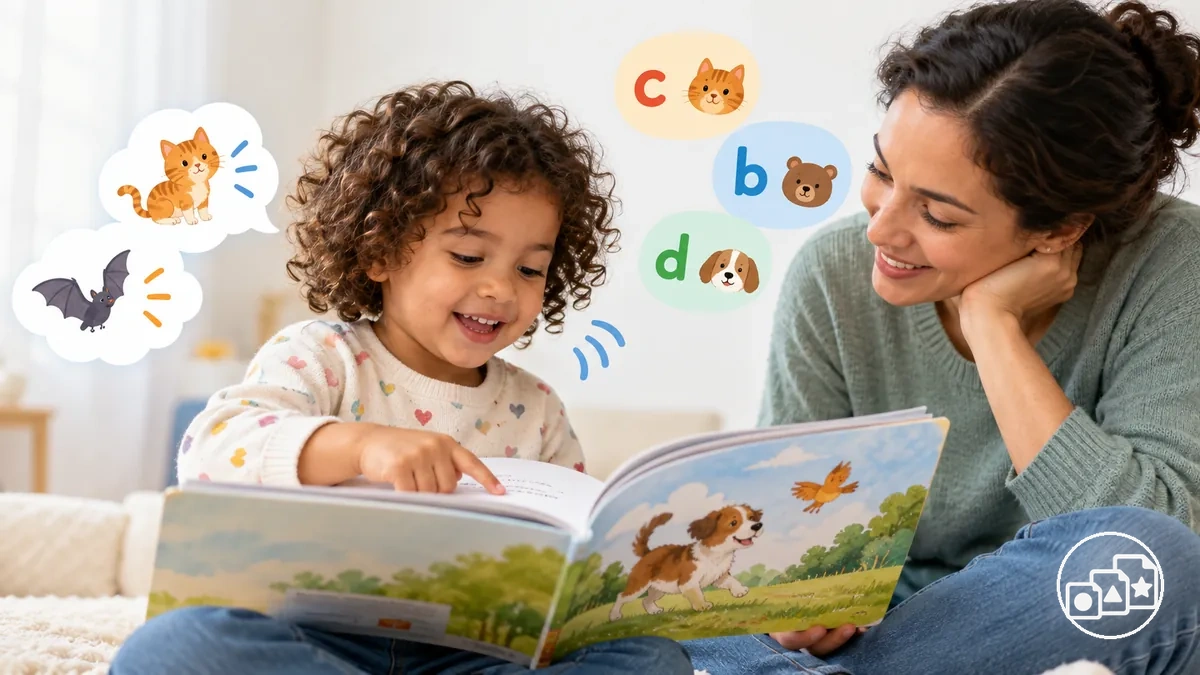
These reading foundations may develop unevenly, so one emerging skill does not by itself establish overall readiness for kindergarten.
Early literacy is one part of broader readiness skills to practise as children prepare for school.
Key Skills Behind Early Reading Readiness
Early reading readiness draws on overlapping early literacy skills that contribute to beginning reading rather than functioning as separate requirements.
The four skill domains below reinforce related language, sound, print, and letter-sound foundations.
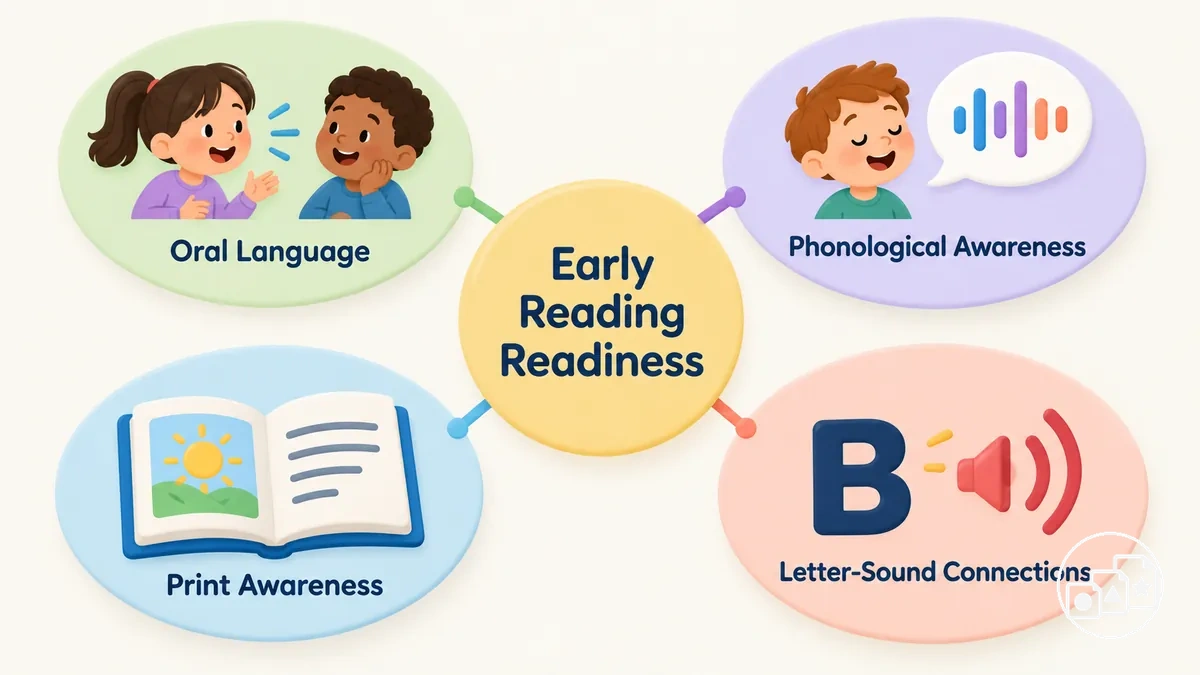
- Oral language and vocabulary: understanding and using spoken language, including vocabulary and listening comprehension, supports making meaning from language.
- Phonological awareness: awareness of sound patterns in spoken language supports attention to features such as rhymes, syllables, and individual sounds.
- Print awareness and book concepts: understanding that print carries meaning and following basic book and print conventions supports familiarity with how written language works.
- Letter-sound connections: beginning to connect familiar letters with sounds supports the transition from spoken-language awareness toward beginning decoding.
These reading foundations can develop at different rates and work together rather than substituting for one another.
Each domain contributes a distinct part of early reading readiness, while its individual skills and developmental variation can be considered more closely within that domain.
Oral Language, Vocabulary, and Listening Comprehension
Oral language includes understanding and using spoken language, while vocabulary and listening comprehension provide meaning that children can later draw on when reading.
Receptive language supports understanding words and sentences, while expressive language supports communicating ideas and experiences.
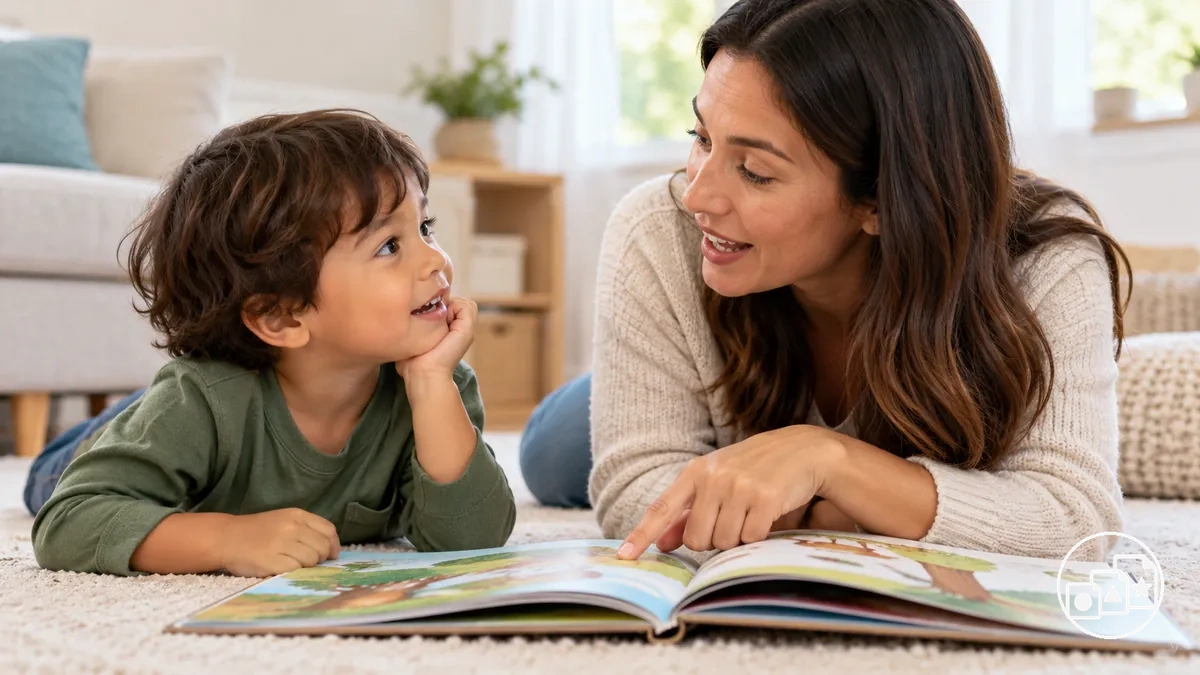
For example, a child who listens to a short story, answers a question about it, and retells an event uses listening comprehension, vocabulary, expressive language, and narrative skills together.
These oral-language abilities support meaning-making and can contribute to later reading comprehension without making any single vocabulary or listening skill sufficient for reading readiness.
Phonological Awareness: Rhymes, Syllables, and Beginning Sounds
Phonological awareness is the ability to hear, notice, and work with the sound structure of spoken language without requiring print.
It includes sound play at different levels, such as hearing a rhyme, identifying a syllable, or noticing a beginning sound and alliteration.
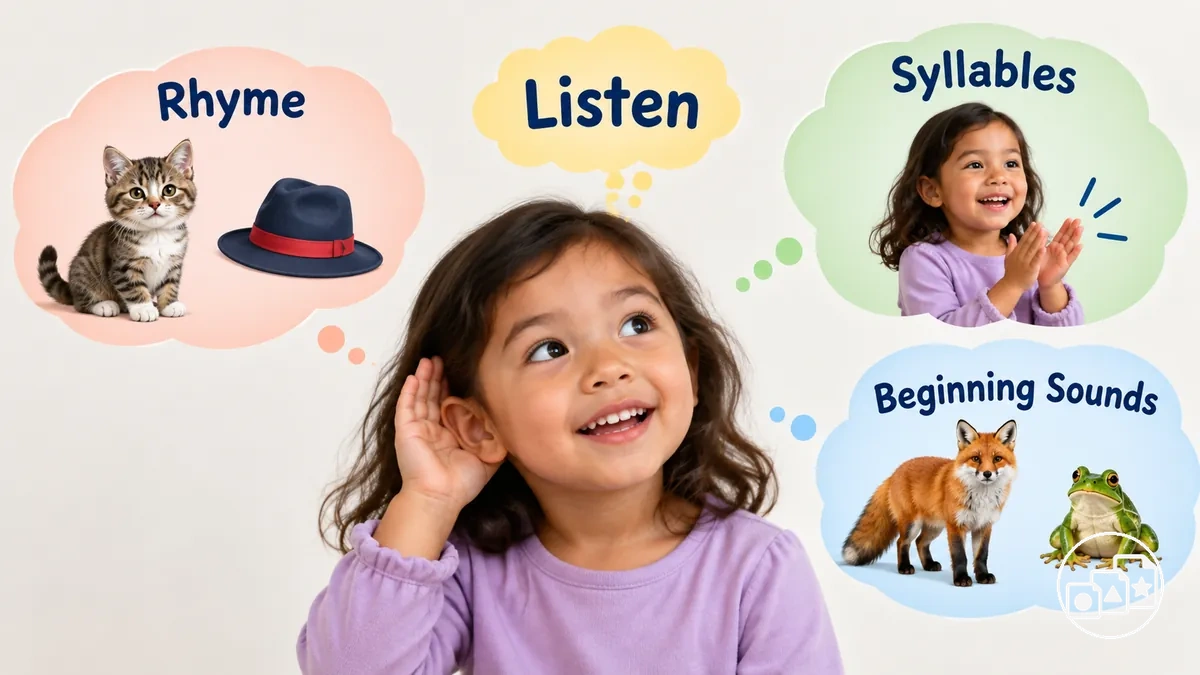
- Rhyme: hearing that spoken words such as “cat” and “hat” share the same ending sound pattern.
- Syllables: hearing word parts and clapping the beats in a spoken word such as “ti-ger.”
- Beginning sounds: noticing the first sound shared by spoken words such as “sun” and “sock,” an example of alliteration.
These spoken-sound examples can help children attend to and play with parts of words that later contribute to beginning reading skills.
Phonological awareness works with spoken sounds, while phonics connects sounds with printed letters or letter patterns.
Print Awareness and Book Concepts
Print awareness is understanding that print carries meaning and that books and written language follow recognizable conventions.
Book concepts include how a book is oriented and handled, how text is organized, and how words and pictures serve different functions.
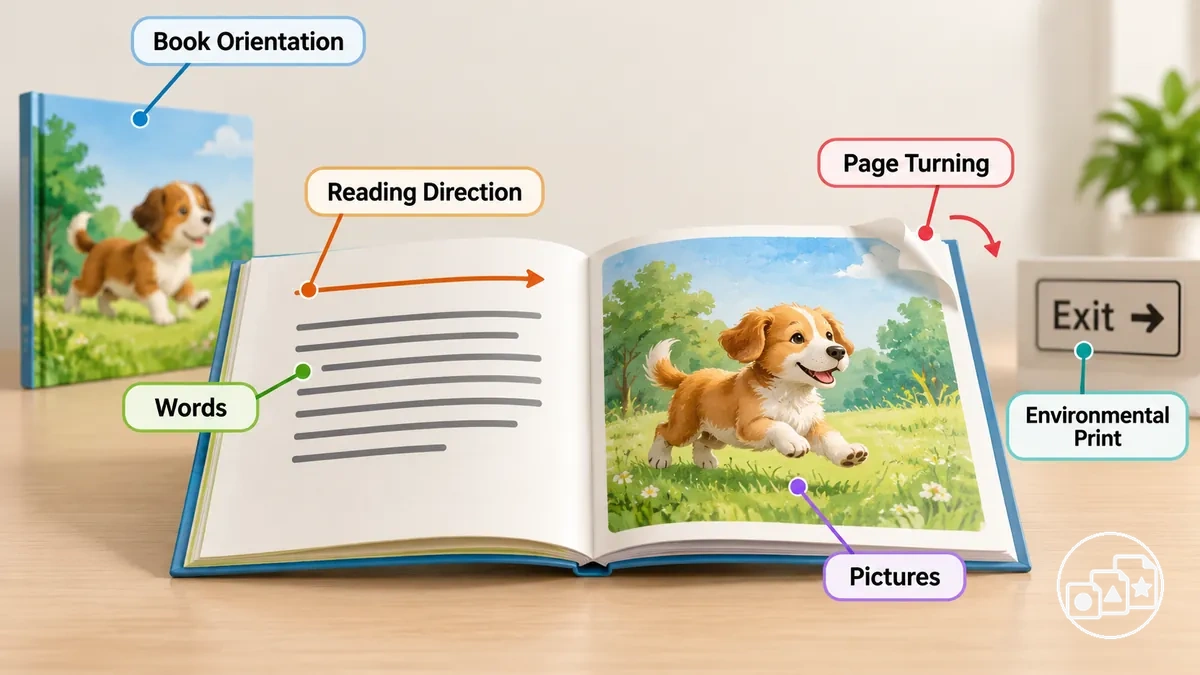
- Book orientation: the front and back covers help show how a book is positioned and where it begins.
- Page turning: pages are handled and turned in the expected direction as a book progresses.
- Directionality: in English, books are read from front to back, lines of text run from left to right, and successive lines normally progress from top to bottom.
- Words and pictures: printed words carry written language, while pictures provide visual information that can support meaning.
- Environmental print: familiar signs, labels, and packaging show that print carries meaning beyond books.
For example, a child may notice words beside a picture in a shared book or recognize that a familiar label or sign contains meaningful print.
These concepts of print help children understand how written material works; they concern book and print conventions rather than requiring mastery of individual letter identities.
Early Letter-Sound Connections
Early letter-sound connections link a familiar printed letter with one or more sounds it commonly represents, creating a bridge between print and spoken language.
Three related but distinct responses
- Recognise the form
- Identify the printed letter as a familiar visual symbol.
- Know the name
- For example, b is named “bee” and m is named “em.”
- Connect a common sound
- Link b with the beginning sound in “bat” or m with the beginning sound in “map.”
A letter can represent more than one sound in English, so early examples should be treated as common sound associations, not one fixed sound for every word.
These responses can develop gradually alongside one another. This distinction separates early letter-sound knowledge from letter recognition for kindergarten readiness. Letter-sound knowledge can support beginning decoding, but it is distinct from simply recognising or naming letters.
How Pre-Reading Skills Work Together to Support Beginning Reading
Beginning reading draws on interacting early literacy foundations rather than one isolated skill.
How the four foundations can combine in one reading encounter
- 1. Meaning
- Oral language supplies vocabulary and language knowledge for understanding the story.
- 2. Spoken sounds
- Phonological awareness helps the child notice sound patterns or a beginning sound in a spoken word.
- 3. Print
- Print awareness helps the child locate words and understand how the text on the page functions.
- 4. Letter–sound link
- Letter-sound knowledge connects a familiar printed letter with a common spoken sound.
These foundations can operate together without forming a fixed developmental ladder. Strength in one area does not determine the child's overall reading outcome, and the skills can develop at different rates.
Ways to Build Pre-Reading Skills Before Kindergarten
Pre-reading skills can be practised through frequent, low-pressure interaction with language, sounds, books, and print in everyday routines.
Shared reading, conversation, storytelling, rhymes, songs, sound play, and simple letter-sound connections can be combined as playful practice, with each method targeting a different early literacy foundation.
- Shared reading and language: share books, conversation, and storytelling to invite talking, listening, vocabulary use, and attention to meaning.
- Rhymes, songs, and sound play: invite children to notice and play with spoken sounds, supporting phonological awareness without turning practice into intensive drills.
- Books and everyday print: notice print in books, signs, labels, and other familiar contexts to practise how written language appears and functions.
- Familiar letters and sounds: briefly connect familiar letters with common sounds to practise early letter-sound connections without expanding the activity into a formal reading program.
Choose activities that are interactive, developmentally appropriate, repeatable, and matched to the skill being practised. If repeated guessing, heavy prompting, or frustration makes the activity unmanageable, simplify one element; if the child completes it comfortably with little support, increase the challenge gradually.
Playful practice and shared interaction can prepare reading foundations for later systematic reading instruction without replacing that instruction or requiring accelerated formal reading before kindergarten.
Shared Reading, Conversation, and Storytelling
Shared reading and back-and-forth conversation give children opportunities to build vocabulary, practise listening comprehension, follow a narrative, and develop interest in print while sharing a story with an adult.
Conversation moves that build meaning
Ask and predict
Use open questions and invite a prediction about what may happen next.
Expand language
Add a useful word or a little more detail to what the child says rather than correcting every response.
Retell
Invite the child to recount an event or sequence from the story in their own words.
Connect experience
Relate a story event or unfamiliar word to something the child already knows.
Keep the interaction responsive and focused on vocabulary, listening, meaning, and narrative knowledge rather than turning shared reading into a quiz. The child can participate through talking, listening, predicting, and retelling without being required to decode the printed text independently.
Rhymes, Songs, and Sound Play
Rhymes, songs, rhythm, and oral sound play give children repeated opportunities to listen to and notice patterns and parts within spoken words.
Playful wordplay can focus attention on ending sounds, syllables, alliteration, and beginning sounds without requiring printed letters.
- Rhyming: say a familiar word such as “cat” and invite the child to supply or match a word such as “hat,” directing listening toward shared ending sounds.
- Syllable clapping: say a familiar name or object and clap its syllables, such as the two spoken word parts in “ti-ger,” to make the parts easier to hear.
- Alliteration: repeat a short spoken phrase such as “Silly Sam sings” and notice that the words begin with the same sound.
- Beginning-sound games: name familiar objects such as “sun” and “sock” and invite the child to identify or match their shared beginning sound.
These oral activities practise different aspects of phonological awareness, and songs or repeated rhythms can provide playful contexts for hearing sound patterns again.
They support spoken-sound awareness but are not complete reading instruction, and rhyming alone is not sufficient preparation for reading.
Notice Print During Shared Reading and Everyday Routines
Adults can make print meaningful by briefly drawing attention to visible print during shared reading and everyday routines.
The goal is to connect print with meaning and book conventions by noticing features such as a title, where reading starts, words and spaces, labels, signs, and page handling in ordinary contexts.
- Title and reading start: point out the title of a storybook and briefly track where reading starts on the page to connect visible text with how reading begins.
- Words and spaces: notice individual words and the spaces between them while reading aloud so the child can see that written text is organised into separate words.
- Labels and packaging: identify familiar environmental print on a food label or other everyday packaging and discuss what the print communicates.
- Signs and routine print: notice a familiar sign, a child's printed name, or words on a calendar and connect the visible print with its meaning in that routine.
- Book handling: point out the front of a book, page turning, and how pages progress to reinforce basic book conventions during shared reading.
These print-noticing cues can remain brief and optional within activities the child is already doing rather than becoming a drill or test.
Children may respond to the cues with different levels of consistency, so the purpose is natural attention to meaningful print and conventions, not a mastery requirement or a separate letter-recognition lesson.
Connecting Familiar Letters With Their Sounds
Practise familiar letters in meaningful words by linking the visible symbol with a common sound it represents. Letters from a child's name or other familiar words can make this connection easier to understand because the symbol and spoken word already have meaning in context.
A simple practice pattern
- Show the familiar letter. Let the child look at and recognise the printed form.
- Name it when useful. Say the letter name without treating the name itself as the sound.
- Model a common sound in a familiar word. For example, connect m with the beginning sound in “map,” s with “sun,” or b with “ball.”
Recognising the letter form, saying its name, and producing a common associated sound are related but distinct responses. Brief practice can focus on the sound–symbol connection without requiring a fixed alphabet order or expanding into complete phonics instruction.
Pre-Reading Skills That Kindergarten Readiness Worksheets Can Reinforce
Kindergarten readiness worksheets can reinforce selected early-literacy skills after the underlying language, sound, or print concept has been introduced through interaction and experience.
The useful relationship is between a worksheet task and the specific skill it lets a child practise, rather than worksheet completion as a measure of overall readiness.
- Picture-rhyme matching: matching pictures whose spoken names rhyme can reinforce attention to rhyme patterns in spoken language.
- Beginning-sound identification: choosing pictures that begin with a target sound can reinforce attention to beginning sounds in familiar spoken words.
- Print-feature noticing: identifying features such as words, spaces, or where reading starts can reinforce attention to basic print features and conventions.
- Familiar letter-sound matching: matching a familiar letter with a picture whose name begins with a common associated sound can reinforce an existing letter-sound connection.